



Dos características integradas en un fregadero de acero inoxidable de calidad trabajan juntas para abordar este problema desde su origen: un revestimiento de amortiguación de sonido rociado y almohadillas de goma adheridas. Juntos, absorben las vibraciones antes de que puedan propagarse, amortiguan la resonancia del lavabo de acero y reducen el perfil de ruido de una cocina en funcionamiento a un nivel realmente cómodo. Estos no son extras de marketing. Son soluciones de ingeniería y su presencia (o ausencia) define el rendimiento acústico de cada fregadero que instale.
El origen del problema: por qué el acero inoxidable amplifica el ruido
El acero inoxidable se valora para los fregaderos de cocina precisamente por sus propiedades físicas: es duradero, higiénico, resistente a la corrosión y relativamente ligero. Pero esas mismas propiedades lo convierten en un conductor acústico eficaz. El acero es un material rígido con baja amortiguación interna, lo que significa que cuando se le aplica energía mecánica (la vibración de un triturador en funcionamiento, el impacto de una cacerola que se cae, la presión del agua corriente), esa energía no se disipa rápidamente. En cambio, viaja a través del material e irradia hacia afuera en forma de sonido.
Un triturador de basura agrava esto significativamente. Cuando un triturador está en funcionamiento, genera vibración rotacional de su motor y choque mecánico al triturar los desechos de alimentos. Esas vibraciones viajan a través del conjunto de drenaje y directamente al lavabo. Sin ningún mecanismo de amortiguación, las delgadas paredes de acero del fregadero funcionan esencialmente como un cono de altavoz, convirtiendo la vibración mecánica en sonido aéreo con notable eficiencia.
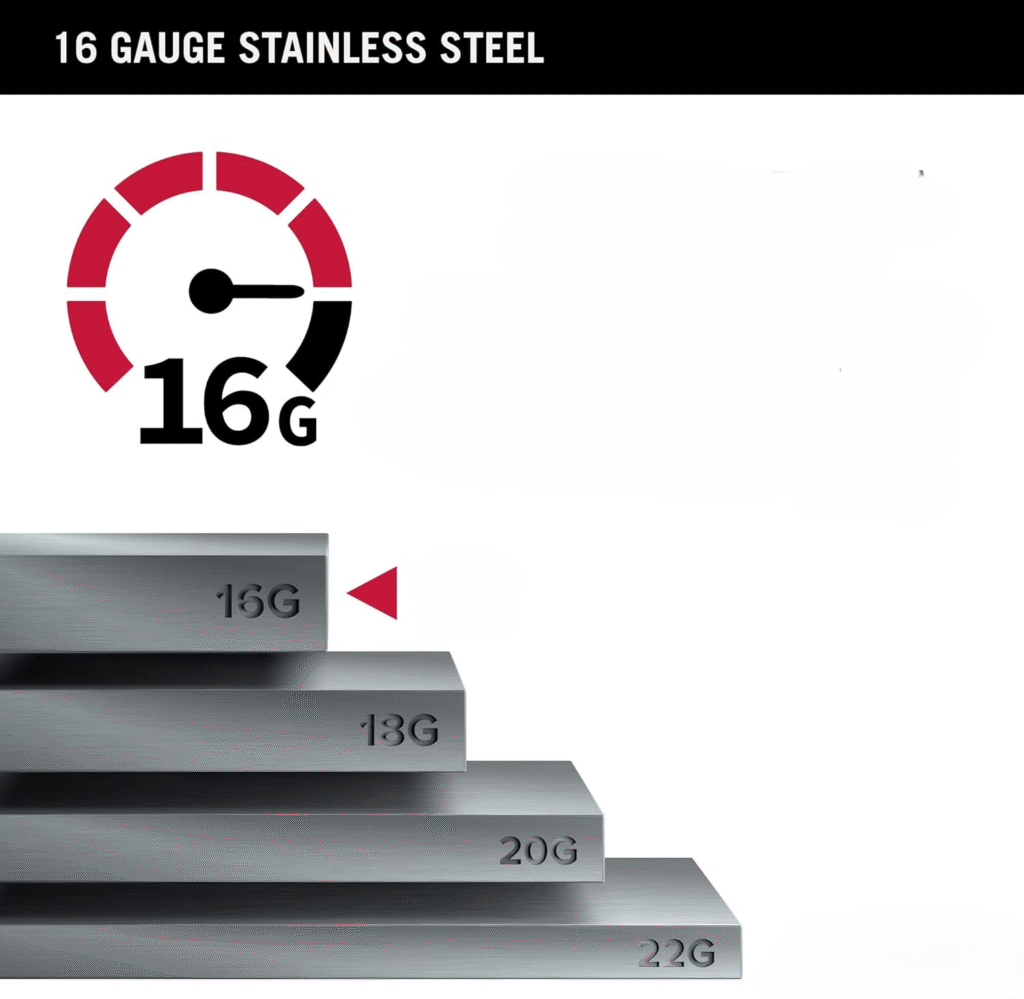
El calibre del acero importa aquí: el acero de calibre 16, más grueso, tiene más masa que el calibre 18, lo que proporciona cierta resistencia natural a las vibraciones. Pero el calibre por sí solo no es suficiente para resolver el problema. Incluso un fregadero pesado de calibre 16 sonará y resonará sin la amortiguación adecuada. La solución requiere un enfoque diferente, uno que aborde la vibración en la superficie de la propia cuenca.
Recubrimiento insonorizante: la primera línea de defensa
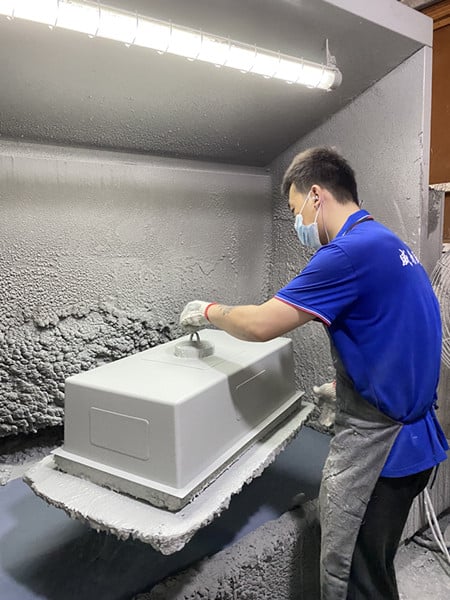
Durante la fabricación, se aplica un revestimiento amortiguador de sonido oreado, a veces llamado capa base o aerosol acústico, a la parte inferior del lavabo. Por lo general, es un compuesto bituminoso o de caucho que se adhiere al acero y forma una capa viscoelástica a lo largo de los paneles planos del lavabo.
La física detrás de esto es sencilla. Los materiales viscoelásticos absorben energía mecánica y la convierten en una cantidad insignificante de calor, en lugar de permitir que se irradie en forma de sonido. Cuando el lavabo vibra, la capa de revestimiento se flexiona con él, disipando energía en el proceso. El resultado es una reducción significativa de la resonancia: el acero simplemente no puede vibrar tan libremente ni tan fuerte como lo haría sin el recubrimiento colocado.
Lo que separa un recubrimiento acústico eficaz de una aplicación cosmética es:
- Área de cobertura. Un revestimiento de calidad cubre toda la parte inferior de cada panel plano grande: la base del lavabo y las paredes laterales. La cobertura parcial deja áreas descubiertas que continúan resonando libremente, socavando el beneficio de las secciones recubiertas.
- Espesor de capa. Las aplicaciones más gruesas proporcionan más masa amortiguadora y absorben más energía. La aplicación fina o desigual reduce sustancialmente el beneficio acústico.
- Integridad del vínculo. El revestimiento debe adherirse firmemente al acero durante toda su vida útil. La delaminación, donde el revestimiento se separa del acero, no solo reduce el rendimiento de la amortiguación, sino que también puede atrapar la humedad, creando un riesgo de corrosión en la parte inferior del lavabo.
En la práctica, el recubrimiento rociado maneja particularmente bien las vibraciones de alta frecuencia, las generadas por el agua corriente, la molienda y la rotación de alta velocidad de un motor de eliminación. Es más eficaz cuando se aplica a paneles planos grandes donde la resonancia es mayor.
Almohadillas de sonido de goma: amortiguación específica donde más importa
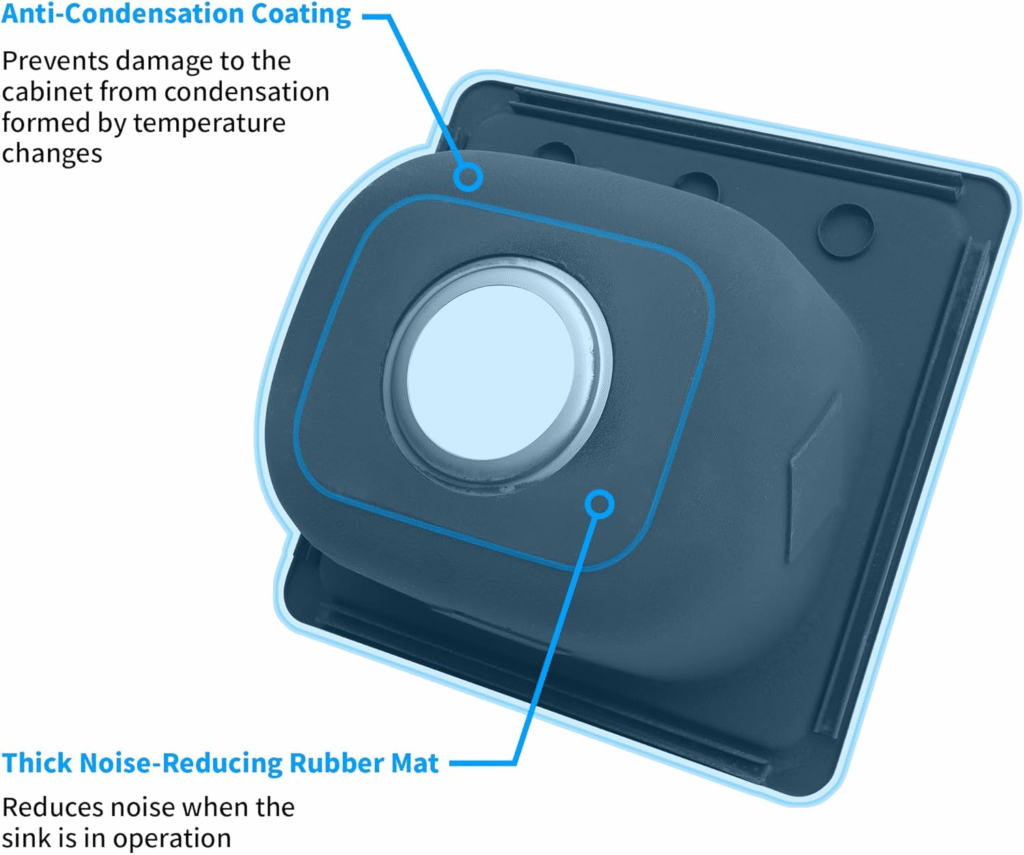
Mientras que el recubrimiento pulverizado cubre grandes superficies, Las almohadillas de sonido de goma proporcionan una amortiguación específica. en los puntos del fregadero que experimentan mayor tensión mecánica. Se trata de almohadillas gruesas de goma o neopreno, previamente adheridas a ubicaciones específicas en la parte inferior del lavabo, generalmente el panel de la base y las áreas alrededor de la abertura del drenaje.
Su papel es doble. En primer lugar, añaden masa concentrada a las zonas de la cuenca más propensas a la resonancia, lo que hace que esos paneles sean más pesados y más difíciles de hacer vibrar. En segundo lugar, y lo que es más importante para el ruido relacionado con la eliminación, interrumpen la trayectoria directa de vibración entre el conjunto de drenaje y el cuerpo del fregadero. Debido a que la vibración de eliminación viaja a través del drenaje y hacia el recipiente en la abertura del drenaje, colocar una almohadilla amortiguadora en esa zona intercepta la energía antes de que pueda extenderse por todo el recipiente.
Los factores clave de rendimiento de los pads de sonido son:
- Densidad del material. El caucho más denso absorbe más energía de vibración. Las finas almohadillas de espuma, que a veces se utilizan como sustituto para reducir costos, brindan un aislamiento mínimo en comparación con el caucho o el neopreno de alta densidad.
- Método de adhesión. Las almohadillas deben estar adheridas firme y permanentemente al fregadero. Las almohadillas flojas o sensibles a la presión pueden moverse, desprenderse con el tiempo o atrapar humedad, creando un problema de mantenimiento.
- Colocación. La ubicación estratégica en la zona de drenaje y los nodos del panel base apunta a los patrones de vibración específicos más responsables de la eliminación y el ruido del agua.
La combinación de revestimiento pulverizado y almohadillas de goma no es redundante: las dos tecnologías funcionan a diferentes frecuencias y en diferentes tipos de superficies. El recubrimiento maneja resonancia de alta frecuencia de área amplia. Las almohadillas manejan vibraciones concentradas de baja frecuencia, particularmente de fuentes mecánicas como desechos. Juntos, producen un fregadero sustancialmente más silencioso que el que cualquiera de ellos podría lograr por sí solo.
¿Qué sucede cuando un fregadero no tiene ninguna de las dos cosas?
Los fregaderos básicos de acero inoxidable suelen fabricarse sin ningún tratamiento de insonorización. Los ahorros de costos son reales pero modestos, y la compensación se hace evidente a los pocos días de la instalación. Al abrir el grifo se produce un eco metálico y hueco. Al dejar caer un utensilio en el recipiente se genera un anillo afilado y penetrante. La activación de un triturador de basura crea una vibración que se puede sentir a través de la encimera y escuchar claramente en las habitaciones adyacentes.
Para los hogares en espacios abiertos, donde la cocina se conecta directamente con la sala de estar o el comedor, este perfil de ruido tiene un impacto significativo en el confort diario. La cocina es cada vez más el centro social del hogar, y un fregadero que amplifica cada sonido operativo socava el ambiente que el diseño de cocina moderno pretende crear.
También vale la pena señalar que el ruido relacionado con la eliminación no es simplemente un inconveniente. La vibración transmitida acelera el desgaste en los puntos de conexión entre el triturador y el conjunto de drenaje y, con el tiempo, puede contribuir al aflojamiento de los accesorios de montaje. Un fregadero que absorbe las vibraciones en lugar de transmitirlas no sólo es más silencioso, sino que también es mecánicamente más suave para el sistema de plomería en su conjunto.
What to Look for When Evaluating a Sink’s Sound Performance
When comparing stainless steel sinks, ask specific questions about how sound dampening is implemented rather than accepting vague claims about being “quiet” o “sound-absorbing.” The following checklist reflects the features that genuinely differentiate acoustic performance:
- Full-coverage sprayed coating on the underside. Ask whether coating covers all major flat panels — base and sidewalls — not just a partial application on the bottom.
- Thick, high-density rubber pads, bonded permanently to the basin. Request specification on pad material and adhesion method.
- 16-gauge steel construction. Heavier gauge provides a foundational level of vibration resistance that complements the damping system.
- Transparencia del fabricante. Los fabricantes de renombre especificarán el tipo y la cobertura de su tratamiento acústico en la documentación del producto, en lugar de hacer referencia a él únicamente como el nombre de una característica.
La presencia tanto de revestimiento como de almohadillas (no sólo uno u otro) es el estándar que se debe buscar en un fregadero diseñado profesionalmente. También vale la pena verificar que el producto específico que estás considerando, y no la línea general de la marca, incluya estas características, ya que no siempre son consistentes en toda la gama de un fabricante.
¿El tipo de acero inoxidable hace la diferencia?
Sí, el grado y el calibre del acero interactúan con el sistema de amortiguación de maneras importantes. Acero inoxidable T304, el referente de la industria compuesto por un 18% de cromo y un 10% de níquel, tiene propiedades acústicas específicas que difieren del acero 201 de menor calidad. El T304 es más denso y duro, lo que afecta la forma en que resuena en diferentes frecuencias. Cuando se amortigua adecuadamente con revestimiento y almohadillas, un fregadero T304 ofrece un rendimiento acústico consistente que resiste décadas de uso. Los aceros de menor calidad no sólo conllevan un mayor riesgo de corrosión: su perfil de resonancia puede ser menos predecible.
El calibre también sigue siendo relevante aquí. Un fregadero T304 de calibre 16 con tratamiento acústico completo representa la combinación con más probabilidades de ofrecer un rendimiento de sonido excelente en un entorno doméstico exigente. Un fregadero de calibre 18 con el mismo tratamiento será más silencioso que un fregadero de calibre 18 sin tratar, pero no alcanzará el mismo nivel de ruido que la opción de calibre más pesado. Si el ruido de la eliminación es una preocupación específica, vale la pena invertir en la actualización al calibre 16.

Fregaderos hechos a mano versus fregaderos estampados:
¿El método de fabricación afecta el rendimiento acústico?
Los fregaderos hechos a mano (fabricados a mano), producidos mediante corte por láser, doblado y soldadura manual por artesanos expertos, suelen utilizar acero más grueso, a menudo de calibre 16 o más pesado, con tolerancias dimensionales más estrictas y un espesor de pared más consistente en todo el lavabo. Estas características crean una superficie de amortiguación más predecible contra la que trabajan el revestimiento y las almohadillas.
Los fregaderos de prensa (estampados) se forman presionando hidráulicamente una lámina de acero en una matriz. El proceso de fabricación introduce un adelgazamiento variable en toda la cuenca: las áreas de mayor profundidad de dibujo se vuelven más delgadas que el calibre nominal. Este espesor no uniforme crea un comportamiento acústico menos consistente, lo que puede hacer que la cobertura total de la amortiguación sea aún más importante.
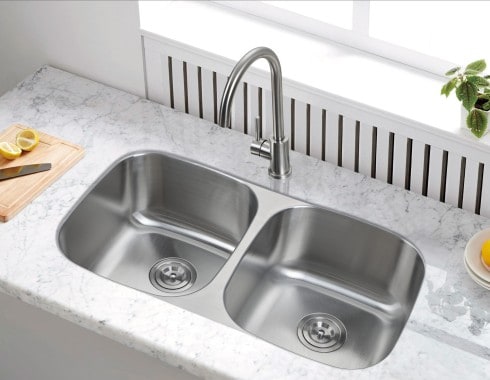
Ambos tipos de fregaderos se benefician sustancialmente del revestimiento acústico y las almohadillas de goma, pero la consistencia estructural de un fregadero hecho a mano proporciona una mejor base para que el sistema de amortiguación funcione de manera óptima. Para una cocina donde el rendimiento del sonido es una prioridad, la especificación ideal es un fregadero T304 de calibre 16 hecho a mano con tratamiento acústico completo.
El ruido en la cocina es uno de esos problemas a los que te adaptas rápidamente y te olvidas de tenerlo en cuenta en tu decisión de compra, hasta que has vivido con un fregadero silencioso y te das cuenta de lo importante que es la diferencia. El revestimiento de amortiguación del sonido y las almohadillas de goma no son características premium reservadas para productos de lujo. Son fundamentos de ingeniería que cualquier fregadero de acero inoxidable bien hecho debería incluir de serie. Cuando evalúe su próximo fregadero, coloque estas dos características en la parte superior de su lista de verificación. Todo lo demás es secundario para una cocina que realmente suena tan bien como parece.
Explora los fregaderos de acero inoxidable Chica Dragon
En chicadragon, cada Fregadero de acero inoxidable en nuestra línea está diseñado con un revestimiento de amortiguación de sonido rociado y almohadillas de sonido de goma gruesa como estándar, no como una mejora. Nuestros fregaderos se fabrican con acero inoxidable T304 (18 % cromo, 10 % níquel) en calibre 16 y 18, y se producen con dos métodos: estampado con precisión (fregadero a presión) y hecho a mano; este último elaborado mediante corte por láser, doblado y soldadura manual especializada para lograr máxima consistencia y durabilidad.
Disponible en configuraciones de montaje inferior, montaje superior, montaje doble, faldón frontal y estación de trabajo, nuestra gama cubre todas las necesidades de instalación y estética de la cocina. Todos los fregaderos cuentan con las certificaciones CUPC e ISO 9001 y están respaldados por una garantía de 15 años. Si a usted le importa un buen rendimiento, a nosotros también nos importa. Visita www.chicadragon.com para explorar nuestra colección completa de fregaderos de acero inoxidable.
