


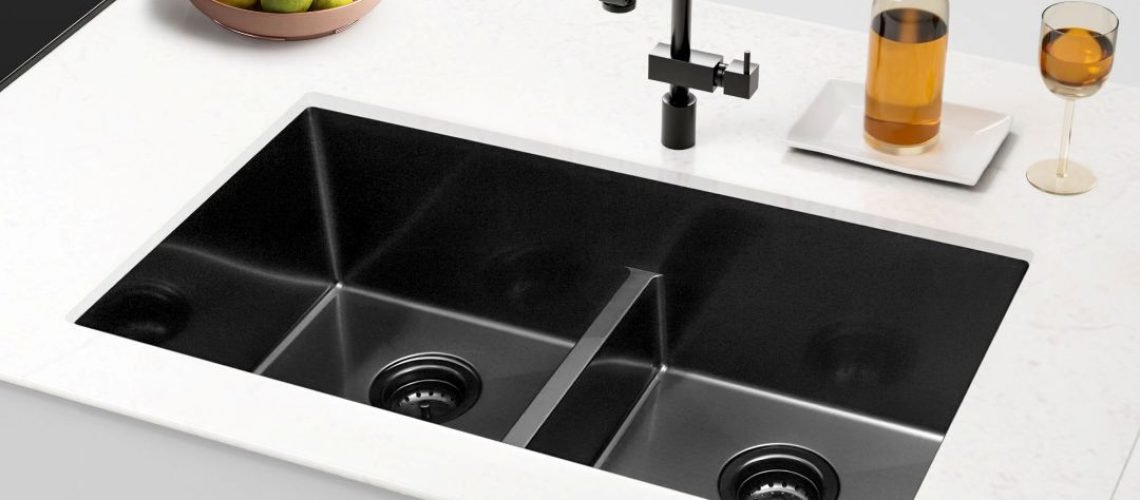
An undermount sink looks simple from above, but the sizing behind it is where many kitchen projects go right or wrong. Because the bowl hangs below the countertop, the sink has to match the cutout, the base cabinet and the way people actually work in the kitchen. Miss on any one of those and you end up with a countertop that needs recutting, a faucet that crowds the backsplash, or a bowl that is too tight for a sheet pan.
This guide covers standard undermount kitchen sink sizes by bowl type, a size chart for quick reference, and practical rules for matching a sink to its cabinet. It is written for homeowners, designers and trade buyers who want numbers they can rely on.
Why Undermount Sizing Needs Extra Care
An undermount sink is fixed to the underside of the countertop, so there is no visible rim to hide a rough cutout. That changes how you read a size listing. Four measurements matter:
- Overall size.The outer footprint of the sink. It decides whether the unit fits the base cabinet.
- Bowl size.The usable basin. It decides what you can actually wash.
- Cutout size.The opening in the stone, quartz or solid-surface top. Undermounts depend on the countertop edge for support, so the cutout should follow the manufacturer’s template closely.
- Revel. How much of the sink edge shows below the countertop opening. Positive, zero and negative reveals all change the usable opening slightly.
Compared with a drop-in sink, whose visible rim hides small cutout gaps, an undermount leaves no room for error. The opening you reach through can also feel a little smaller than the listed bowl size because of the edge and reveal, so many buyers go slightly larger on bowl width when space allows.
If you want a refresher on how each of these is defined, our simple guide to kitchen sink size walks through the basics.
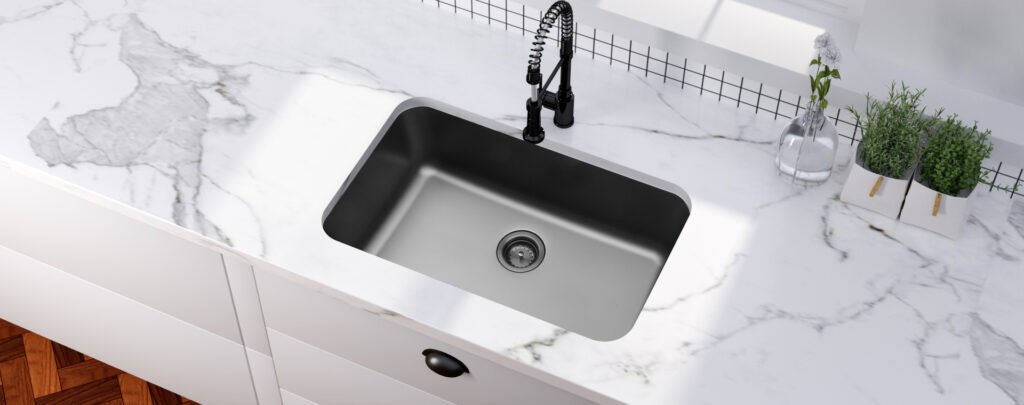
Standard Undermount Sink Size Chart
The table below shows the sizes you will see most often in the market. Ranges vary between manufacturers, so use it for planning and confirm the final numbers against the spec sheet or cutout template.
| Sink type | Overall length (in / mm) | Front to back (in) | Minimum base cabinet |
|---|---|---|---|
| Bar or prep, single bowl | 15–18 in / 381–457 mm | 15–18 | 18–21 in |
| Compact single bowl | 21–24 in / 533–610 mm | 17–19 | 24–27 in |
| Standard single bowl | 27–30 in / 686–762 mm | 17–19 | 30–33 in |
| Large single bowl | 32–33 in / 813–838 mm | 18–19 | 36 in |
| Double bowl 50/50 | 31–33 in / 787–838 mm | 18–20 | 36 in |
| Double bowl 60/40 | 31–33 in / 787–838 mm | 18–20 | 36 in |
| Extra-large double or workstation | 36–37 in and up / 914–940 mm and up | 18–19 | 40 in or wider |
A simple rule of thumb: the base cabinet should be about 3 inches wider than the sink’s overall length. A 36-inch cabinet therefore takes a sink up to about 33 inches long, and a 30-inch cabinet suits a sink around 27 inches.
Source Sinks Direct from CHICA
How to Match a Sink to Your Base Cabinet
Work through these steps before you order:
- Measure inside the cabinet. Take the width from side wall to side wall, not the countertop length.
- Subtract about 3 inches. The result is the longest sink that will fit comfortably, with room for the cabinet walls and mounting hardware.
- Check front-to-back clearance. Allow space for the faucet base, handle sweep and any soap dispenser before the backsplash.
- Review what sits underneath. A garbage disposal, water filter or pull-out bin can limit bowl depth or call for a rear drain.
- Confirm countertop support. Ask your fabricator what support is needed around the cutout before the sink is ordered.
Remember the counter space around the sink as well. The National Kitchen & Bath Association’s Kitchen Planning Guidelines recommend at least 24 inches of landing area on one side of the cleanup sink and at least 18 inches on the other. An oversized sink in a short counter run can leave nowhere to set down dishes, so plan the sink and the surrounding counter together.
Single Bowl vs Double Bowl Sizes
- Single bowl.One open basin handles stockpots, roasting pans and baking sheets without a divider in the way. Single bowls from about 27 to 33 inches long suit most homes, and compact 21 to 24 inch versions work well in smaller kitchens. Our single bowl kitchen sink buyer’s guide covers the trade-offs in more detail.
- Double bowl 50/50.Two equal bowls let you soak in one and rinse in the other. Expect an overall length of about 31 to 33 inches or more, which usually means a 36-inch base cabinet.
- Double bowl 60/40.One larger bowl for pots and pans, plus a smaller bowl for rinsing or a disposal. It is a popular choice for households that wash by hand but still want room for big cookware.
The right layout depends on routine. If a dishwasher handles most of the load, a large single bowl is hard to beat. If you prep and clean at the same time, two bowls give you more flexibility.
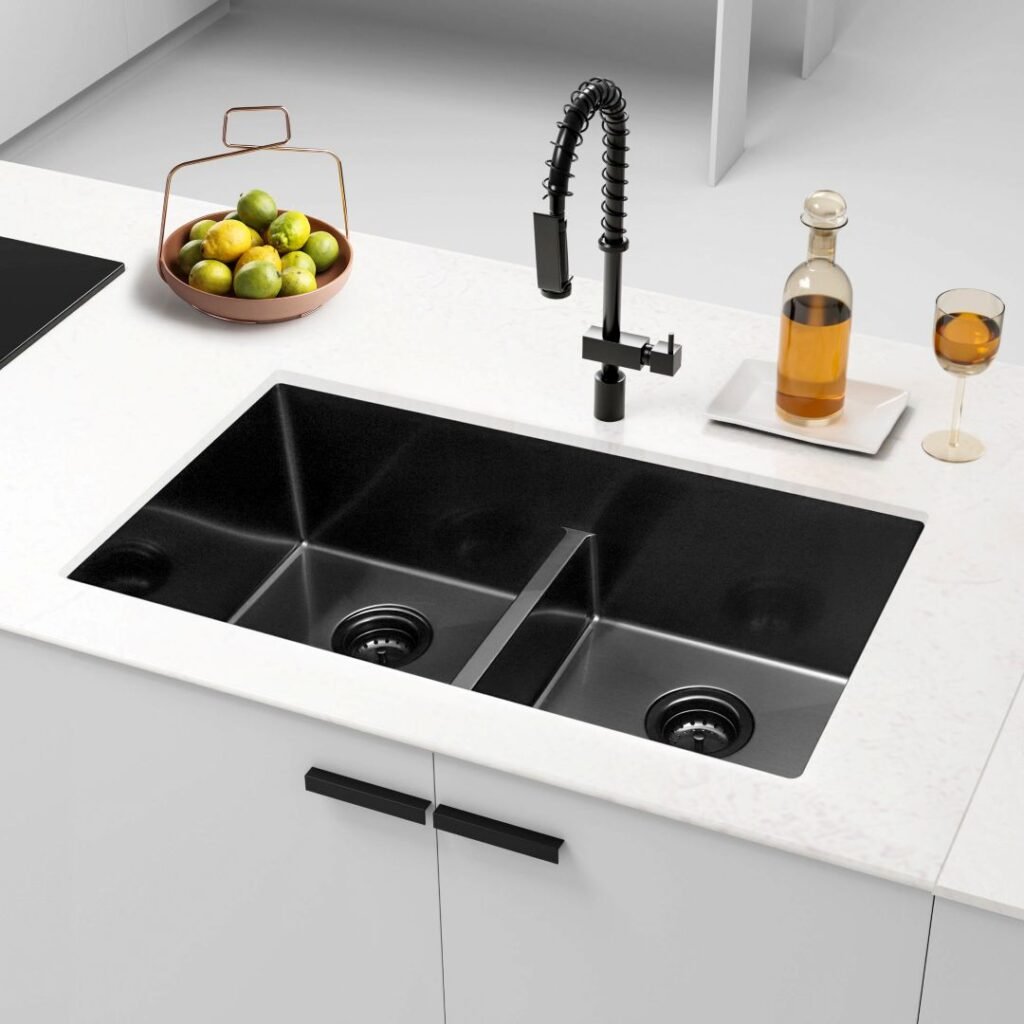
Depth, Gauge and Material
Length and width get most of the attention, but three other specs shape how a sink performs day to day.
- Depth. Most undermount bowls run 8 to 10 inches deep. Deeper bowls hold more and limit splashing, though very deep ones mean more bending for shorter users.
- Misura. A lower gauge number means thicker steel. 16 gauge is about 1.5 mm and 18 gauge about 1.2 mm. The thicker option resists dents and tends to be quieter.
- Steel grade. Type 304 (18/10) stainless steel is the usual choice for kitchen sinks because of its corrosion resistance and easy cleaning.
Quality is also worth checking on paper. The ASME A112.19.3/CSA B45.4 standard covers stainless steel plumbing fixtures and sets requirements for materials, construction, performance, testing and marking, so it is a useful reference when comparing suppliers. If you prefer a matte, scratch-resistant look, a granite composite undermount sink follows the same sizing logic, though composite units are heavier and need solid cabinet support.
Compact, Bar and Accessible Layouts
Not every kitchen follows the standard formula.
- Bar and prep sinks.Sinks of 15 to 18 inches suit islands, wet bars and pantries. They free up the main sink for cleanup while a second person preps.
- Accessible kitchens.The U.S. Access Board’s guide to lavatories and sinks explains that the front of the rim or counter should be no higher than 34 inches, with knee clearance at least 27 inches high where a forward approach is used. A shallower bowl and a rear drain can make that clearance easier to achieve.
- Workstation sinks. Built-in ledges and sliding accessories often make these sinks longer, so measure the cabinet carefully before choosing one.
Common Sizing Mistakes to Avoid
- Measuring the countertop instead of the cabinet interior.
- Ignoring faucet reach and handle sweep.
- Forgetting the clearance a disposal or filter needs.
- Ordering before checking the cutout template.
Comparing overall length only. Two sinks of the same length can have very different bowl sizes and corner radii.
Chica Undermount Sizes at a Glance
Chica Dragon manufactures stainless steel undermount sinks in T304 stainless steel, in 16 and 18 gauge. Three double bowl models show how the numbers above play out:
- UM2819D.Double bowl, 28 × 19 inches, with two 15 × 15 inch bowls in 16 gauge steel. It comes with a sprayed sound-dampening coating plus a thick rubber pad, a triple-reinforced under panel, a cutout template and fasteners. A good match for a 33-inch base cabinet.
- CH8049.50/50 double bowl, 31-1/2 × 19-3/4 inches (780 × 480 mm), with two 15 × 15 inch bowls, 9 inches deep and a 3-1/2 inch drain opening. It fits a 36-inch base cabinet comfortably.
- CH9446.50/50 double bowl, 37 × 18 inches, with two 17 × 15 inch bowls, 8 inches deep, in 16 gauge steel. Suited to wider bases of about 40 inches or more.
To protect the bowl floor from scuffs, pair any of them with a bottom grid.
Source Kitchen Sinks Made to Your Size
If you supply kitchens, distribute plumbing products or run your own sink line, the right size range is what keeps customers coming back. Chica Dragon is a sink manufacturer based in Guangdong, China, offering OEM and ODM service for stainless steel undermount, top mount and farmhouse sinks in single and double bowl designs. Our sinks are made from T304 stainless steel in 16 or 18 gauge, in pressed or handmade construction, with grids, colanders and drying racks available to match. cUPC and ISO 9001 certification, small-volume wholesale orders and ready-to-ship samples mean you can test a size before you commit. Browse our undermount sink range, O contatta il nostro team with your target dimensions and we will reply within one working day.
