


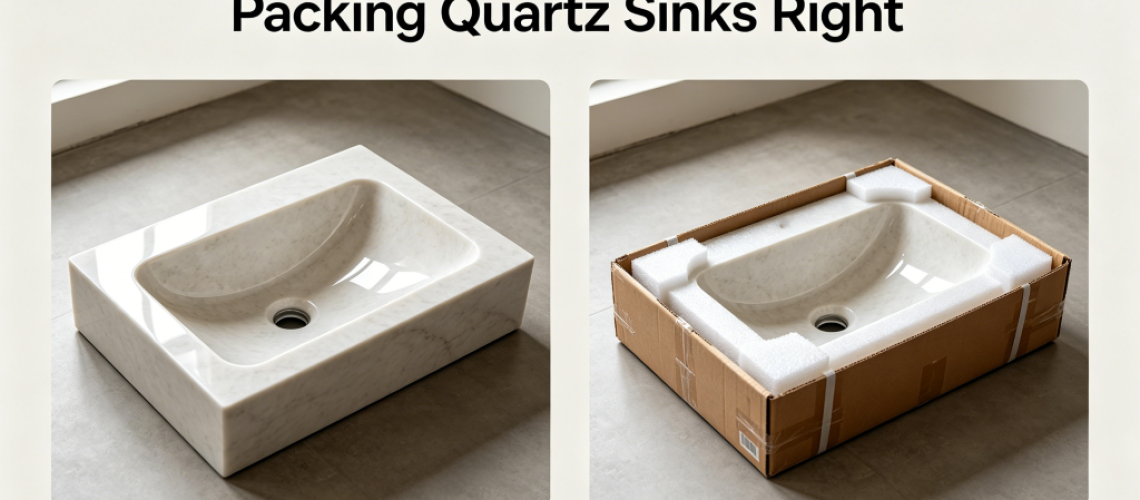
Quartz composite sinks— composed of roughly 80% quartz stone and 20% resin — are among the most robust products in the kitchen sink category. But robust doesn’t mean indestructible. Their weight (often exceeding 20–30 lbs per unit), rigid body structure, and vulnerable mounting edges make them particularly susceptible to certain types of transit stress: corner impacts, compression damage, surface abrasion, and stress fractures from improper stacking. For manufacturers, distributors, and importers, getting the packaging and palletizing protocol right is not optional — it is the difference between a flawless arrival and a costly claims cycle.
This guide walks through the critical considerations at every stage of the packing and palletizing process.
1. Start with the Right Inner Packaging
The inner box is your first — and most important — line of defense. For quartz sinks, the inner carton must be engineered to handle the product’s specific vulnerabilities.
Key considerations:
- Box grade: Use double-wall or triple-wall corrugated cartons. Single-wall boxes are entirely unsuitable for the weight and rigidity of quartz. Double-wall corrugated (typically B/C flute combination) offers the right balance of compression strength and cushioning.
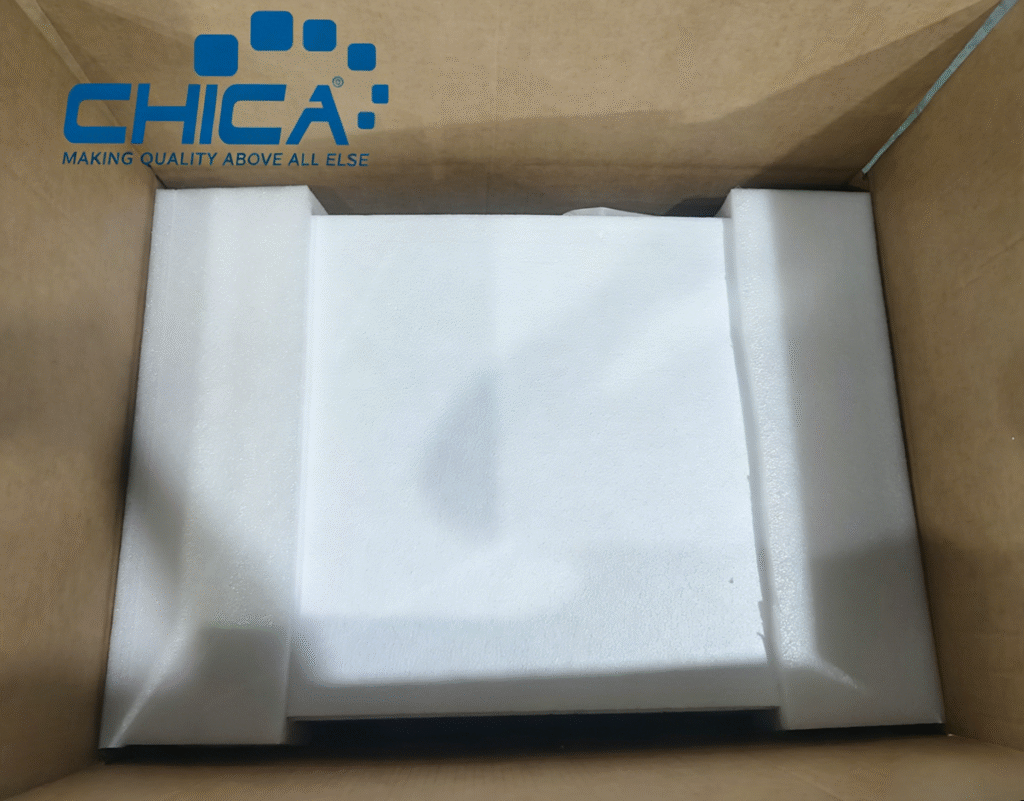
- Box sizing: The carton should be sized so the sink fits snugly. Excessive void space inside the box allows the product to shift during transit — a primary cause of corner and rim damage.
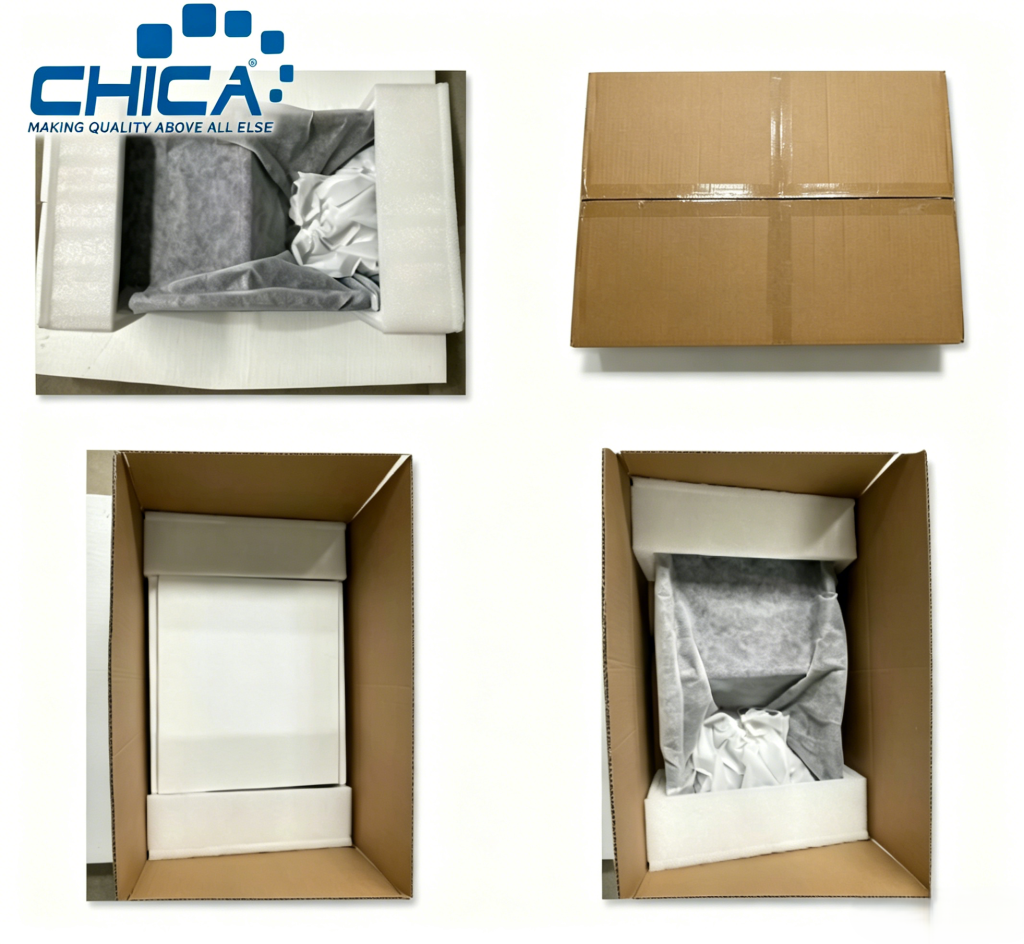
- Foam-fit inserts: Pre-molded EPE (expanded polyethylene) foam inserts or die-cut foam sheets should cradle the sink body precisely. Focus foam density at the corners and rim, which are the highest-risk impact zones.
- Surface protection: Before the sink goes into its carton, the bowl interior and outer surface should be covered with a layer of protective film or foam sheeting to prevent abrasion from foam, cardboard dust, or accessory hardware included in the box.
Accessory containment: Hardware packs, drain strainers, cutout templates, and mounting clips should be bagged and secured inside the carton in a dedicated tray or compartment. Loose hardware rattling around the sink during transit is a frequent cause of surface scratches.
2. Engineer the Outer Carton for Export Conditions
If the quartz sink is shipping internationally — via ocean freight in a 20- or 40-foot container — the outer packaging must account for conditions far beyond road transport. Humidity, temperature variation, compression from stacking, and the extended handling chain of port-to-port shipping all introduce additional stresses.
- Moisture barrier: Line the outer carton interior with a polyethylene moisture barrier or shrink wrap the entire inner-boxed sink before outer carton closure. This is especially critical for ocean freight, where humidity inside containers can spike significantly.
- Outer carton labeling:Clearly mark the outer carton with “FRAGILE,” “THIS SIDE UP,” and handling pictograms. While no label guarantees careful handling, labeled packages do statistically receive more deliberate attention at sorting facilities and loading docks.
- Carton sealing:Seal all seams with reinforced pressure-sensitive tape (minimum 2-inch width). H-tape both the top and bottom seams to prevent box failure under compression.
3. Select and Prepare the Right Pallet
Pallet selection is a frequently underestimated step in damage prevention. The pallet is the structural foundation of every palletized shipment, and a compromised pallet introduces risk at every subsequent handling touch point.
Pallet considerations for quartz sinks:
- Material: Hardwood pallets are preferred for the weight loads typical in kitchen sink shipments. For export container shipments, ensure pallets are ISPM-15 heat-treated and stamped — non-compliant wood pallets can be quarantined or rejected at customs in many markets.
- Pallet condition:Inspect every pallet before loading. Cracked boards, missing stringers, or protruding nails are common causes of carton puncture and load collapse. Never reuse pallets with structural damage.
- Pallet sizing: The loaded cartons should fit within the pallet footprint — no overhang. Overhang beyond the pallet edge reduces compressive strength and creates unsupported stress on carton corners, which is a leading cause of damage.
- Load capacity: Standard hardwood pallets support 2,000–4,000 lbs of static load. Know your total pallet weight (product + cartons + dunnage) before loading and confirm the pallet is rated accordingly.
4. Stack and Arrange Loads Correctly
How cartons are arranged on the pallet has a direct and measurable impact on transit damage rates.
- Column stacking: Stack cartons in a straight column configuration (carton corners aligned vertically) rather than a brick-pattern for quartz sinks. Quartz sink cartons are heavy enough that the columnar load path through straight stacking reduces compressive stress on individual boxes.
Weight distribution: Distribute weight evenly across the pallet surface. A load that is heavier on one side shifts the center of gravity and increases the risk of tip-over during forklift handling and truck transport.
Single-product pallets: Where possible, avoid mixing quartz sink cartons with lighter or irregularly shaped products on the same pallet. Mixed loads create uneven compression and instability.
- Pallet height: Keep pallet height within the guidelines of your carrier or container specification — typically no more than 48 inches total (pallet + load). Excessive height raises the center of gravity and increases tipping risk.
5. Secure the Pallet Load Properly
A well-packed pallet is only protected when it is properly secured. Two tools are non-negotiable: stretch wrap and strapping.
- Stretch wrap:Apply industrial stretch film in a minimum of three to five passes around the full pallet load, including passes that anchor the load to the pallet base. Stretch wrap that does not anchor to the pallet allows the load to ride off the pallet under lateral force — a scenario common during hard braking or container ship roll.
- Corner boards:Cardboard or plastic edge protectors (corner boards) placed at the vertical corners of the pallet load prevent stretch film and strapping from cutting into carton edges. They also significantly improve the overall compressive rigidity of the palletized column.
- Polypropylene strapping:For heavy sink pallets, add horizontal strapping bands over the stretch wrap in two directions. Strapping provides the tensile resistance that stretch film alone cannot offer under high lateral or compressive forces.
6. Load Containers with Damage Prevention in Mind
The final step — loading the shipping container or trailer — determines whether all the upstream packaging work is preserved or undone.
- Fill voids:Empty space inside a container is space for pallets to shift during transit. Use airbags, dunnage boards, or foam blocking to brace palletized loads against lateral movement. This is especially important for LCL (less-than-container-load) shipments, where your pallets may share space with other cargo.
- Load sequence:Position heavier pallets low and toward the front (near the container doors or the truck cab). Lighter loads go on top and toward the rear. A low center of gravity significantly reduces load shifting during cornering and braking.
- Secure to container floor:For high-value shipments, use load bars or cargo straps to anchor pallet stacks to the container floor anchoring points. This adds a critical layer of security during ocean transit.
- Documentation:Include a packing list and shock/tilt indicator labels where appropriate. Shock indicators provide measurable evidence of rough handling, which supports claims if damage does occur.
Whether you are a manufacturer shipping to international distributors or a wholesaler consolidating orders for retail, the investment in getting packing and palletizing right is one of the highest-return decisions in your logistics operation.
Upgrade Your Kitchen with a Stainless Steel Sink Built to Last
At ChicaDragon, we’ve been engineering high-performance kitchen sinks since 2008 — and we apply the same precision standards to how our products are packed and delivered. Our stainless steel kitchen sinks are crafted from 16-gauge or 18-gauge T304 stainless steel (18/10 CrNi), and feature heavy-duty sound-dampening coating and rubber underpad for a quieter, more refined kitchen experience.
From sleek undermount single-bowl designs to spacious double-bowl workstation sinks and apron-front farmhouse styles, every ChicaDragon sink is shipped with full installation hardware. Ready to find the right fit for your kitchen or project? Explore the full Chica Dragon stainless steel sink collection at www.chicadragon.com and request a quote today.
